Book presentation January 19, Rijksakademie Amsterdam
Report by Madelon van Schie

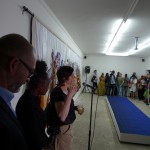
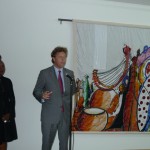
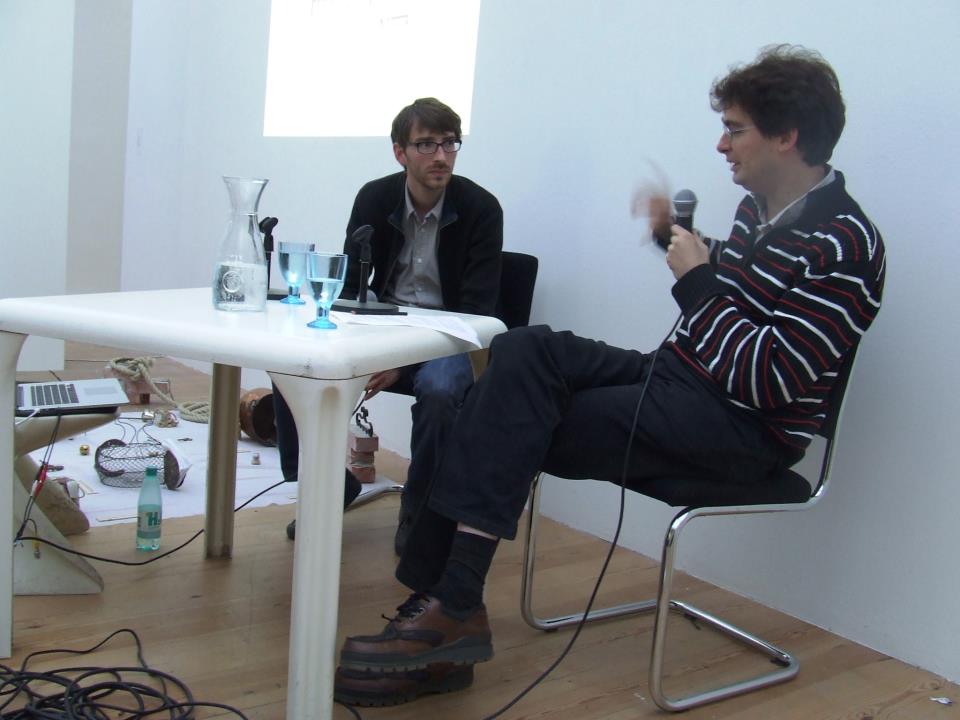
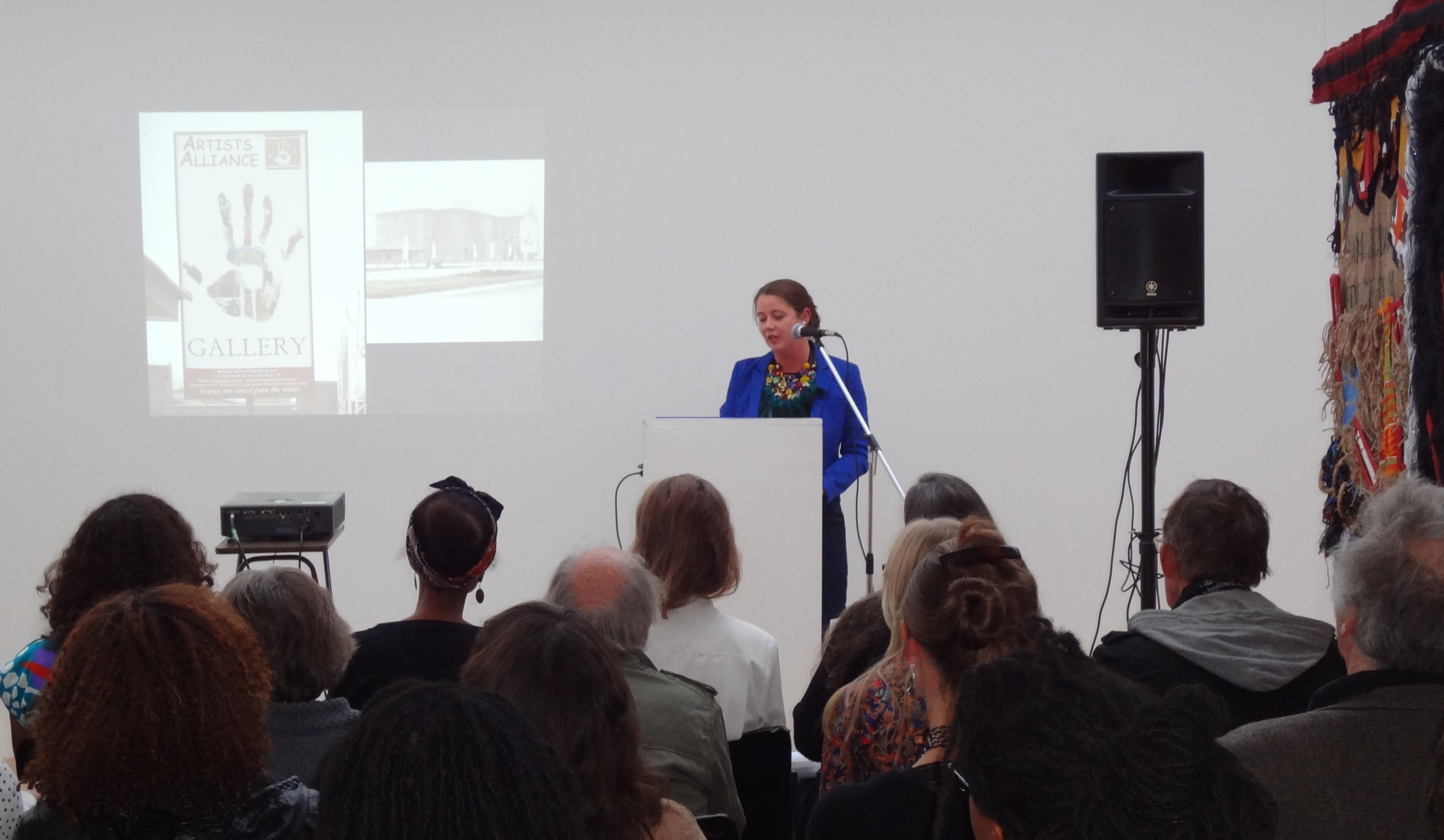
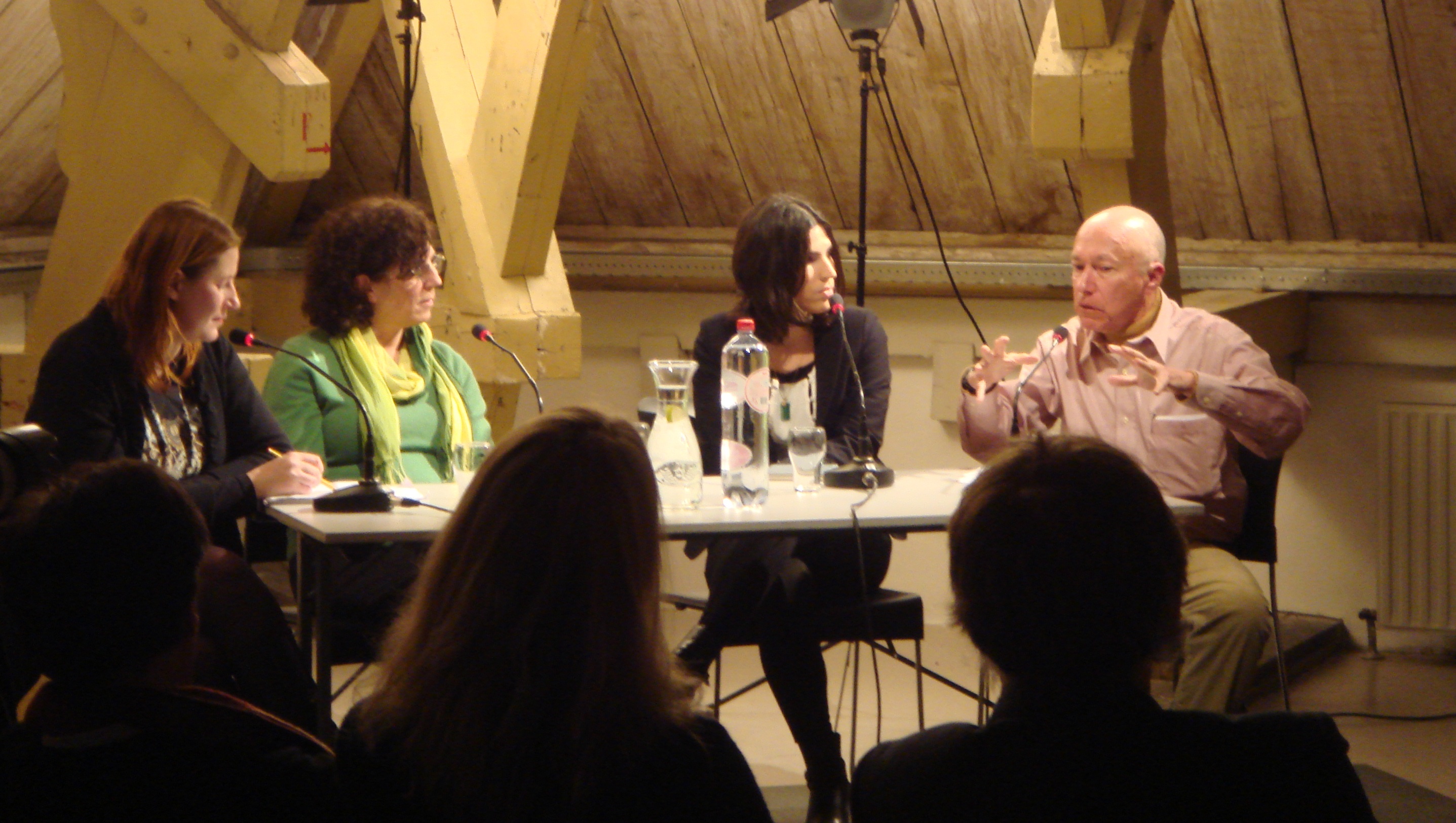
Book presentation Making Art Global, roundtable discussion with Annie Fletcher, Rachel Weiss, Direlia Lazo and Gerardo Mosquera.
The book presentation of Making Art Global (Part 1): The Third Havana Biennial 1989, with contributions by Rachel Weiss, Luis Camnitzer, Coco Fusco and Geeta Kapur ao, formed part of the program Temporary Stedelijk 3-Stedelijk@Rijksakademie and was organized in collaboration with publisher Afterall Books. Introduced by Annie Fletcher, editor Rachel Weiss and curator Gerardo Mosquera pointed out the groundbreaking aspects of the third Havana Biennial and clarified its context in two presentations and a roundtable discussion in which independent curator Direlia Lazo participated as well.
More
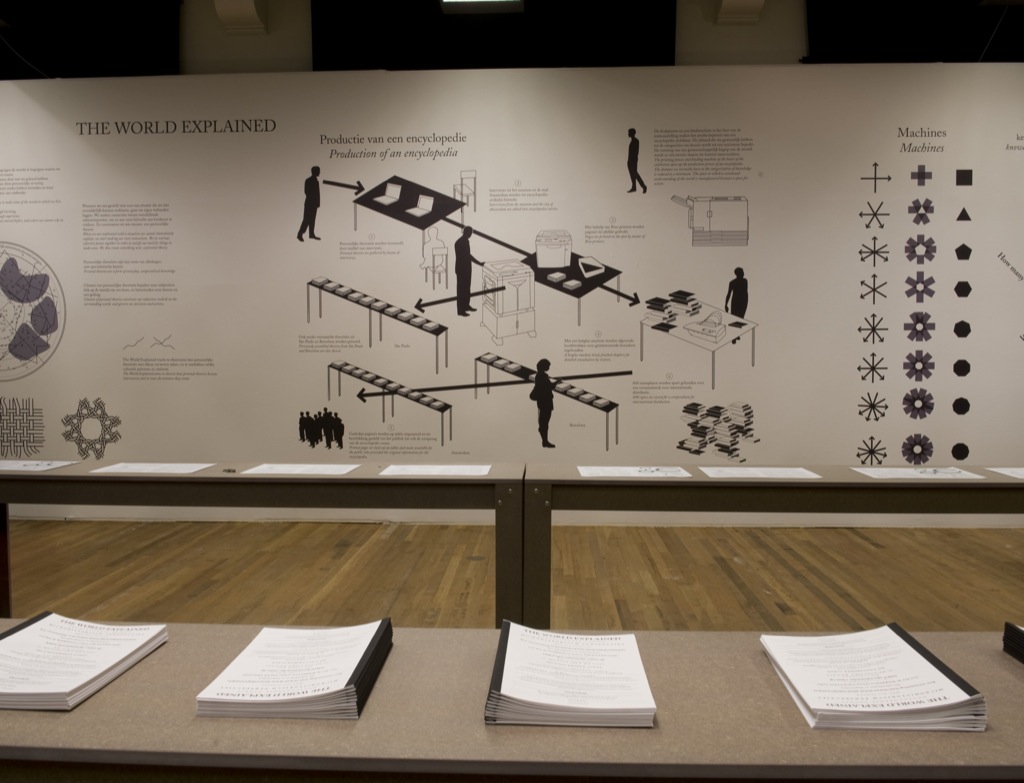
Mexican artist Erick Beltrán presents his project ‘The World Explained’ at Tropenmuseum Amsterdam. It consists of a large collection of interviews with so-called ‘non-experts’ on how the world functions. With a small team of anthropologists Beltrán interviewed people in Sao Paulo, Barcelona and Amsterdam. The conversations were recorded and transcribed and finally collected into an ‘Encyclopedia’, which visitors could take home. The accompanying maps and diagrams on the wall emphasise Beltrán’s theory on the production of knowledge as a local-based phenomenon.
‘The World Explained’ is on view until March 11. Click here to read a report in Dutch.
By publishing the Project ‘1975’ essay ‘The Politics of Exclusion’, SMBA presented an introduction to the range of problems connected to the definition of African Art. Author Rikki Wemega-Kwawu is certainly not alone in his criticism towards the current discourse of African and Global art. In addition the Nigeria-born American Sylvester Okwunodu Ogbechie, Associate Professor Art History at the University of California Santa Barbara, criticizes the ‘Eurocentric’ definition of contemporary art and the idea of ‘global contemporary’ in his article ‘Where is Africa in Global Contemporary Art?’ in Savvy Journal.
Okwunodu Ogbechie argues: ‘My estimate is that there are less than one thousand “Contemporary African artists” who live and work in the West although they account for 99 % of all artists included in international exhibitions of Contemporary African Art.’
Comparable to Wemega-Kwawu’s argument, Okwunodu Ogbechie states that the aspects of ‘transnational interaction’, to travel and communicate internationally, seem to be crucial in the definition of contemporary art. Yet, who has the facilities to perform this transnational interaction? And are the concepts of place, location and site-specific history of any value to the definition of African art? Click here to read Sylvester Okwunodu Ogbechie’s article ‘Where is Africa in Global Contemporary Art?’ in the online version of Savvy Journal (page 24-31).
Artist and writer Rikki Wemega-Kwawu wrote the sixth Project ‘1975’ ‘The Politics of Exclusion’. In this essay Wemega-Kwawu criticizes the fixation on Contemporary African Diaspora artists and the powerful position of curator Okwui Enwezor.
The Nigeria-born American curator Okwui Enwezor is often acknowledged as the representative of African art and artists. The first Johannesburg Biennale in 1997 and the Documenta XI in Kassel in 2002, are just two examples of the many exhibitions he organized. With these presentations and publications on the topic of African art, Enwezor played a crucial role in the production of a definition of contemporary African art. Wemega-Kwawu criticizes this definition in his Project ‘1975’ essay, as he signalizes an ‘Enwezor School’: a group of African artists, now living in the West, that are preferred and circulated well above their counterparts living in Africa. Wemega-Kwawu argues that Enwezor hereby defines contemporary African art by the artists’ experience of Diaspora: “as if nothing worthwhile is happening on the continent”. By the maintenance of this definition African artists living on the continent, are hindered to enter the international art scene. Click here to download Newsletter 125 ‘Tala Madani – The Jinn’ and to read Rikki Wemega-Kwawu’s essay ‘The Politics of Exclusion’.
Rikki Wemega-Kwawu (Ghana, 1959) lives and works as an artist and writer in Takordi, Ghana. He is alumnus of the Skowhegan School of Painting and Sculpture, Maine, U.S.A. In 2008, he was an Adjunct Professor in Art at the New York University – Accra, Ghana Campus, where he taught ‘postcolonial studio practices’.
While Project ‘1975’ researches the relation between international contemporary art and the postcolonial discourse, Former West reflects upon the changes introduced to the world (and thus to the so-called West) by the political, cultural, artistic, and economic events of 1989.
The fall of the Berlin wall in 1989 represented the end of the Cold War between the communist East and the capitalist West, and represented the end of an era (or even ‘the end of history’ in the words of Francis Fukuyama). The term “former West,” the unofficial counterpart to the widely used “former East,” refers to this division. How have the events in 1989 influenced the dichotomy? What has changed since then? And what is it that we have in mind when we now speak of the “East” and the “West?”
These are the questions initiator Maria Hlavajova (artistic director of BAK, basis voor actuele kunst, Utrecht) and co-organisor Charles Esche (director Van Abbemuseum, Eindhoven) formulated during the introduction of the first research congress in 2009.
More

Tala Madani’s work can be characterized by an illustrative stroke of the brush, moving back and forth across the borderline between the clear-cut line of comic strips and an expressionist use of color. Her compositions situate male figures in absurd scenes touching upon the non-rational aspects of human behavior. Against the background of intimate, domestic or dreamlike environments, the figures expose themselves freely and easily to observers. Apparently obsessed, they are completely immersed in the demonic scope of their activities.
Through taking the idea of the demonic obsession as a point of departure for the exhibition ‘The Jinn’, Madani has added a mythological element to her artistic practice. While a fascination for the non-rational has always driven her artistic production, the explicit involvement with Islamic tradition and Arab folklore enriches her practice in a fresh and intriguing way.
Click here to read more about the exhibition ‘Tala Madani – The Jinn’.
Click here to read an interview with Tala Madani about ‘The Jinn’.
The exhibition ‘Tala Madani – The Jinn’ opens on Saturday 10 December. ‘ChitChat’ (2007) is the first animation Madani produced, and will be part of the exhibition at Stedelijk Museum Bureau Amsterdam. Watch ‘ChitChat’ online as a preview to the exhibition and read an interview with Tala Madani about her work, ‘The Jinn’ and her current inspirations below.
On October 25, Stedelijk Museum Bureau Amsterdam hosted two book launches of two publications that each focuses on the postcolonial discourse.
The publication If you want, we’ll travel to the moon together is initiated by a group of Art History students of the University of Amsterdam. The book presents a collection of essays that students wrote during the (Dutch) research seminars ‘Kunst en Globalisering’, directed by dr. Marga van Mechelen. During the research seminars, the students focused on the question how artists have been responding to globalism during the past fourty years. The publication includes essays on Rinke Nijburg, Mark Lombardi, Yael Bartana, NSK-State en Transnational Republic, Dan Perjovschi, Banksy, Ai Weiwei, Dinh Q. Lê, Aernout Mik, Sharmila Samant, Renzo Martens and The Action Mill. Prof. dr. Mieke Bal provided an introductory lecture during the book launch, in which she reflected on the topic art and globalism.

Kari-kacha Seid'ou, art teacher, introduces Bouwhuis and Winking to the students of the College of Art / KNUST, Kumasi, Ghana.
In the week of October 27th, Jelle Bouwhuis and Kerstin Winking travelled to Ghana to meet with artists, as part of the exchange programme organised by SMBA and the Nubuke foundation in Accra. After their visit to Accra, they travelled to Elmina, Takoradi and Kumasi.
In Takoradi they met painter Rikki Wamega-Kwaku, who they requested to write a contribution for the next SMBA Newsletter. The College of Art of the Kwame Nkumrah University of Science & Technology invited Bouwhuis and Winking to visit Kumasi and to give a lecture on SMBA and contemporary curating. Furthermore several studio visits were organised to meet with several artists and art students.
Besides Ghana, Bouwhuis and Winking also travelled to Bamako (Mali), to attend the opening of the Bamako Encounters, the Biennale for African photography. One of the promising artists they met in Mali, Abdoulaye Konaté, might be part of a future exposition at SMBA.
Click here to read Bouwhuis’ review on the Bamako Encounters Biennale for Nafas Art Magazine.
During the Amsterdam Museum Night (5 november), artist Michael Tedja (1971) will present a lecture on art, identity politics and schisms in Stedelijk Museum Bureau Amsterdam. Central is the self-cleansing standard of Dutch art appreciation, which from Tedja’s perspective breathes a virtually 19th century colonial mentality: “The handling, the way in which you handle your own colour and the many colours around you are a colour study. I see it as an artist project that develops by mixing… I do not like Reformed art. Piet Mondriaan didn’t want people to paint diagonals; it had to be vertical and horizontal; the narrow mindedness….”.
Tedja is a painter, writer, poet, publisher and a curator. His art work has been exhibited nationally and internationally. Tedja’s newest book is called The auto poem and consists of nine parts. Each part comprises of 48 pages. His lecture at SMBA is part 7: The teaching poem, of which a part has appeared earlier, in the Dutch monthly ‘Hollands Maandblad’. Tedja wrote The auto poem in the framework of his BijlmAIR residency organized by CBK Zuidoost and Stedelijk Museum Bureau Amsterdam.

Cover of Rhoda Woets PhD thesis 'What is This? Framing Ghanaian art from the colonial encounter to the present'.
On September 28, the Vrije Universiteit of Amsterdam’s department of Social and Cultural Anthropology organized a seminar entitled ‘(Re)contextualising Art: Anthropology, Art History and the Museum’. During this afternoon anthropologists, art historians and curators gathered to discuss the current status of globalization and contemporary art.
Issues that were put up for discussion are the modes of evaluation to judge, acquire and display art from “outside.” What tools and criteria should curators use? Is an intimate knowledge of the social and cultural settings in which artists operate essential in valuing their work, as anthropologists tend to argue? A growing number of anthropologists study contemporary art(ists) but what have their contributions been to the formation of new art historical discourses? In short: how can anthropologists, art historians and curators come to a more fruitful cooperation and exchange?
Both art historian Gabriele Minelli and art historian Madelon van Schie wrote a report about the seminar. Gabriele Minelli’s report is published below. Click here to read Madelon van Schie’s report in Dutch.
Clémentine Deliss is the author of the fifth Project 1975 essay ‘Stored Code. Remediating Collections in a Post-ethnographic Museum.’ In this essay Deliss investigates what kind of framework might be best suited to present a world-cultures museum’s collection in the twenty-first century.
How can we translate the ‘ethnographic’ collections of world-cultures museums into the Post-ethnographic discourse? Deliss argues for a remediation of the world-cultures collections. To remediate means to bring about a change of medium, to experiment with alternative ways of describing, interpreting and displaying the objects in the collection. While analysing the Weltkulturen Museum in Frankfurt, Deliss states that to re-think the ethnographic collection means to engage with that necessary mix of discomfort, doubt, and melancholia in order to translate these objects to a contemporary context and gently build additional interpretations onto their existing set of references. For this process to work, fieldwork has to take place within the museum itself and no longer on journeys to distant lands. Hereby the museum becomes a space of visual inquiry and production. Download Newsletter 124 here to read Clémentine Deliss’ essay.
Clémentine Deliss is curator and director of the Weltkulturen Museum, Frankfurt. She studied contemporary art and social anthropology in Vienna, London and Paris and holds a PhD from the School of Oriental and African Studies, University of London on 1920s French anthropology and dissident surrealism. Between 1992 and 1995 she functioned as artistic director of Africa95, a contemporary arts festival coordinated with the Royal Academy of Arts, London, and 60 UK institutions. From 1999 until 2000, Deliss was guest Professor at the Stadelschule, Frankfurt. She is producer and publisher of Metronome and worked as director of the research institute “Future Academy” at the Edinburgh College of Art.
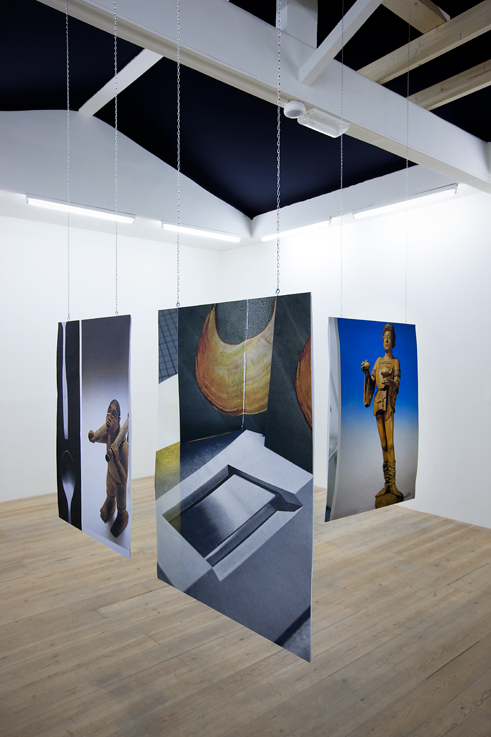
Vincent Vulsma‘s interests are directed toward the effects of shifting cultural objects across different social and historical contexts, investigating the role that artists and other art specialists have in these processes of value-making. He brings together objects and patterns taken from their contexts in ethnographic collections and the canons of modernist design and photography, deliberately moving back and forth along the lines between what is classified as commodity, art or ethnographic object.
The central object of ‘A Sign of Autumn’ in the SMBA is a Baulé mask, a loan from the Tropenmuseum in Amsterdam. The mask came to Vulsma’s attention because of its rich acquisition and exhibition history. Other elements of the exhibition are a series of large-scale Jacquard-woven reproductions of Kuba-textiles and a series of assemblages, combining a selection of stools made in the Congo (probably around the 1930s) with a set of Ray Eames’ Walnut Stools, which were designed in 1960 and which are still industrially produced and commercially distributed today.
Together with the artist Matthijs de Bruijne, Stedelijk Museum Bureau Amsterdam has organised an evening with presentations by artists and groups focusing on the effort to create greater social solidarity. One of the points of departure for this evening is the lecture by Joost de Bloois, given at the opening of the exhibition ‘Informality’ in the Stedelijk Museum Bureau Amsterdam, about precarity, art and political activism.

Performance Actie Schone Kunsten